
Skip to content
synovial sarcoma foundation
  • About
    • Mission
    • Initiatives
    • Affiliations
    • Leadership
    • Board of Directors
    • Medical Advisory Board
    • Careers
  • Resources
    • Synovial Sarcoma FAQ
    • Treatments
    • Clinical Trials & Therapies
    • Synovial Sarcoma Patient Survey
    • Synovial Sarcoma Tumor Board
    • Patient Stories
    • Patient Resources
    • Eddie’s Story
    • Video Resources
    • SSF Ambassador Program
  • Research Programs
    • Clinical Research
    • Tumor Glow
    • Synovial Sarcoma Registry
  • Latest News
Donate

Send us a note

Please fill out the form below and we will gladly respond as soon as possible.


    Case Study, Education

    When Synovial Sarcoma Mimics the Heart’s Most Common Tumor
    August 3, 2026 ayushis Comments Off on When Synovial Sarcoma Mimics the Heart’s Most Common Tumor
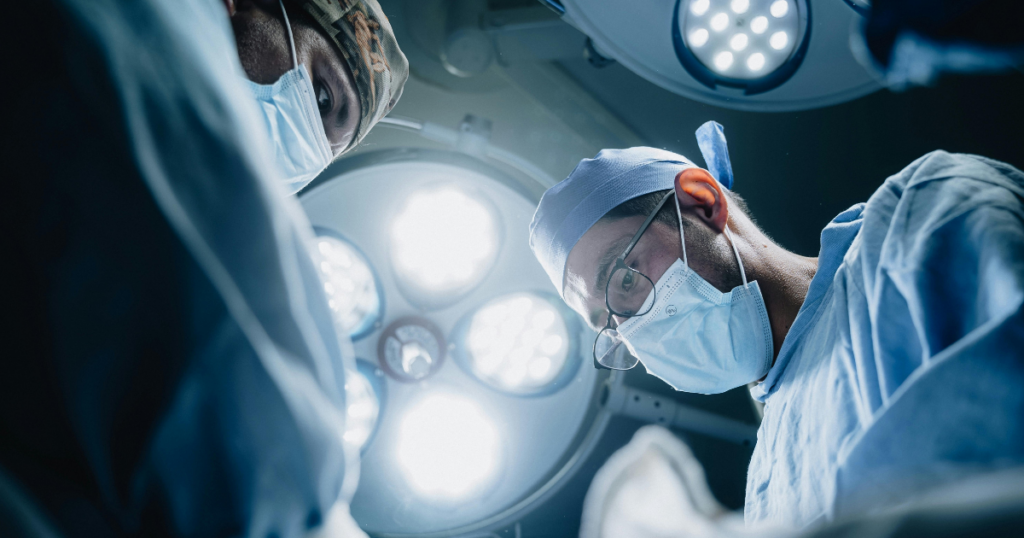
    Two surgeons in masks and scrubs focus on a patient under bright operating room lights, performing a surgical procedure.

    A case report in AME Case Reports by Yun Xiao, Zhourui Liu, and Sha Li of the Department of Ultrasound at Guizhou Medical University, China, documents a rare case of synovial sarcoma arising directly in the pulmonary artery, a location so uncommon that it was initially mistaken for a benign cardiac tumor.

    What the Case Involved

    A 35-year-old man presented with a month of exertional chest pain. Echocardiography revealed a solid mass at the pulmonary valve with a broad base and unclear border, initially suspected to be myxoma, the most common and almost always benign cardiac tumor. But several findings didn’t fit: contrast imaging showed only mild perfusion within the mass, lower than typical for myxoma’s usual brisk enhancement, and MRI and PET/CT showed ill-defined borders and unusual metabolic activity, raising suspicion for malignancy instead.

    Surgery Revealed a More Complex Picture

    Surgeons found two separate tumors, not one, attached to the pulmonary valve and right ventricular outflow tract. Both were removed and the valves reconstructed. Pathology showed a spindle cell tumor, and FISH testing confirmed the SS18 gene rearrangement, the molecular signature that definitively diagnoses synovial sarcoma. The final diagnosis was biphasic synovial sarcoma with a Ki-67 index of about 60%, indicating an aggressive tumor. Despite complete surgical removal, imaging six months later showed local recurrence and lung metastases, and the patient began chemotherapy.

    Lessons for Diagnosis and Care

    This case illustrates how easily synovial sarcoma can be mistaken for myxoma when it appears in the heart, since both can look similar on standard imaging. The authors point to specific red flags that should raise suspicion for malignancy instead: a broad base rather than a thin stalk, poorly defined borders, and only mild contrast perfusion rather than myxoma’s typical brisk enhancement.

    The case also reinforces that molecular testing, not imaging or histology alone, is what confirms a synovial sarcoma diagnosis. And the rapid recurrence seen here, despite a technically complete resection, supports the authors’ recommendation that tumors with a high Ki-67 index be considered for prompt adjuvant therapy rather than observation alone.

    For more information, read the full case report here. For more information about the Synovial Sarcoma Foundation, please visit our website.


    • biphasic synovial sarcoma
    • cardiac myxoma vs synovial sarcoma
    • Ki-67 synovial sarcoma prognosis
    • primary cardiac synovial sarcoma
    • pulmonary artery synovial sarcoma
    • SS18 gene rearrangement
    • synovial sarcoma case report
    • synovial sarcoma lung metastasis
    • synovial sarcoma misdiagnosis
    ayushis

    Post navigation

    Previous
    Next

    Search

    Categories

    • Black Flag Racing (2)
    • Case Study (4)
    • Children (1)
    • CHOP (3)
    • Clinical Trial (2)
    • Development (11)
    • Dr. Theodore Laetsch (3)
    • Education (24)
    • Europe Expansion (1)
    • Healthcare (13)
    • Latest News (19)
    • Patient Story (1)
    • Programs (1)
    • Rare Cancer (7)
    • Rare Cancer Funding (2)
    • Research (20)
    • SSF Ambassador Program (1)
    • Synovial Sarcoma Conference (2)
    • Synovial Sarcoma Registry (6)
    • Teresa Belluco (1)
    • Tumor Board (2)

    Recent posts

    • Close-up of blue gloved hands adjusting a microscope with two visible objective lenses, focusing on a glass slide in a laboratory setting.
      The Cells Around the Tumor May Hold the Key to Improving Immunotherapy in Synovial Sarcoma
    • Four SSF ambassadors are shown: a smiling boy in a Superman shirt, two women and one girl with bald heads, all pictured individually. The Synovial Sarcoma Foundation logo and web link appear at the bottom.
      Synovial Sarcoma Foundation Launches Ambassador Program During Childhood Cancer Awareness Month
    • Microscopic view of blue and green rod-shaped bacteria with visible hair-like structures on a white background.
      How Better T Cell Manufacturing Could Unlock the Next Wave of Synovial Sarcoma Therapies

    Tags

    Afami-cel Afamitresgene autoleucel BAF complex cancer BAF complex mutation cancer biphasic synovial sarcoma Cancer Research cardiac myxoma vs synovial sarcoma CHOP chromatin remodeling cancer research Foghorn Therapeutics immunotherapy Li-Fraumeni syndrome sarcoma MAGE-A4 synovial sarcoma NY-ESO-1 synovial sarcoma pediatric cancer research jobs Philadelphia precision medicine Rare Cancer rare cancer research rare disease rare soft tissue sarcoma research sarcoma palliative care sarcoma research sarcoma treatment soft tissue sarcoma solitary fibrous tumor SS18 gene rearrangement SS18-SSX fusion oncoprotein Synovial Sarcoma synovial sarcoma biomarker testing synovial sarcoma case report synovial sarcoma diagnosis Synovial Sarcoma Foundation synovial sarcoma immunotherapy synovial sarcoma misdiagnosis synovial sarcoma molecular mechanism synovial sarcoma research synovial sarcoma surgery synovial sarcoma targeted therapy synovial sarcoma treatment T-Cell Therapy targeted therapy TECELRA Tecelra synovial sarcoma webinar

    Related posts

    A scientist wearing a lab coat, gloves, safety goggles, and a mask examines a test tube beside a microscope in a laboratory. Another scientist works in the background. Scientific equipment and screens are visible.
    Case Study, Education

    When Synovial Sarcoma Hides in Plain Sight: A Diagnostic Wake-Up Call

    June 4, 2026 ayushis Comments Off on When Synovial Sarcoma Hides in Plain Sight: A Diagnostic Wake-Up Call

    A case report published in Frontiers in Oncology by Miyazaki, Oike, and colleagues at Niigata University Graduate School of Medical and Dental Sciences, Japan, documents a rare synovial sarcoma presentation that defeated every standard diagnostic test – and delayed correct treatment by over three years. The case carries urgent lessons for patients, advocates, and clinicians […]

    A person in a lab coat and blue gloves is placing a test tube into a blue rack in a laboratory setting, with lab equipment visible in the background.
    Education, Healthcare

    Targeted Therapy Shows Promise in Rare BRAF-Mutated Synovial Sarcoma

    March 18, 2026 ayushis Comments Off on Targeted Therapy Shows Promise in Rare BRAF-Mutated Synovial Sarcoma

    Synovial sarcoma is a rare soft tissue sarcoma most commonly treated with surgery, chemotherapy, radiation therapy, and targeted drugs such as pazopanib. However, treatment options can be limited for advanced or metastatic disease. A recently published case report describes a patient with synovial sarcoma who achieved a complete response after receiving targeted therapy based on […]

    The Synovial Sarcoma Foundation is a registered 501(c)(3) nonprofit organization. Tax ID number is 33-4027591. Contributions to the Synovial Sarcoma Foundation are tax-deductible to the extent permitted by law.

    • Terms & conditions
    • Privacy policy
    synovial sarcoma foundation
    • community@synovialsarcoma.org
    1025 Thomas Jefferson St. NW, Suite W-3200, Washington DC 20007
    Facebook-f X-twitter Linkedin

    Navigation

    • About
    • Research Programs
    • Patient Stories
    • Resources

    Stay in touch