Why Every Tumor Sample Matters: What a New Sarcoma Biobank Study Means for Synovial Sarcoma
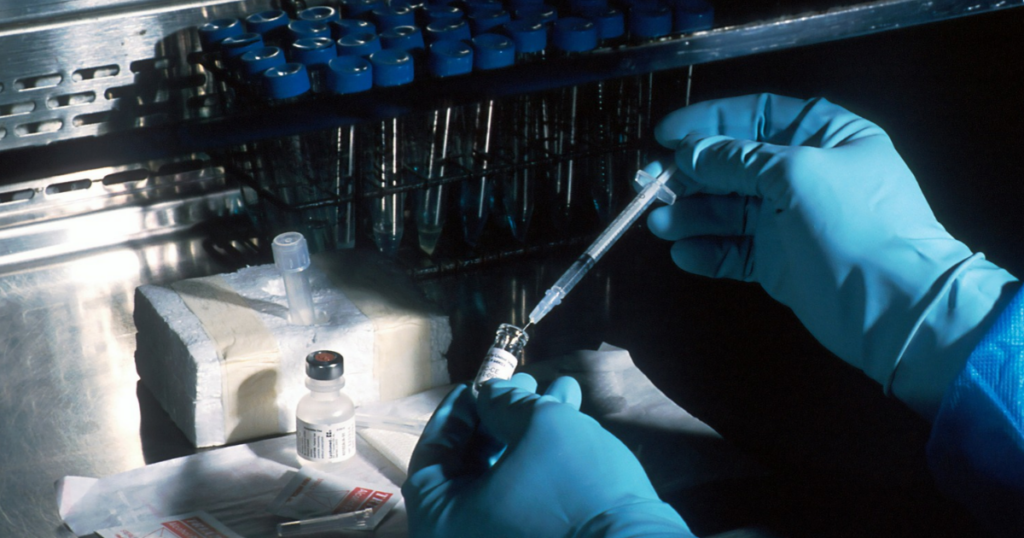
A new study in Advanced Science (October 12, 2026) shows what becomes possible when patients donate tumor tissue and researchers pair it with detailed clinical and genetic data. The same idea drives the Synovial Sarcoma Registry and Biorepository, and every patient who joins makes the next study possible.
What the study found
Over ten years, a team at Shanghai General Hospital grew donated tumor tissue from 132 sarcoma patients into 155 living laboratory models, then mapped each one’s DNA and RNA. The models closely matched the patients’ own tumors, giving researchers a way to study each cancer and test treatments outside the body. About half of the models carried a genetic change that could, in principle, be matched to a drug.
Synovial sarcoma stood out in two ways:
- It grew more readily than any other type. About 56 in 100 synovial sarcoma samples became working models, against about 44 in 100 overall.
- The models kept the disease’s driver. The SS18::SSX fusion that defines synovial sarcoma was confirmed in both the patients’ tumors and their models.
The authors also note that rarer sarcomas were thinly represented. Answering synovial sarcoma’s own questions needs a collection built around synovial sarcoma patients.
Why the SSF Registry matters
The Synovial Sarcoma Registry and Biorepository, led by Children’s Hospital of Philadelphia with Penn Medicine, is the world’s largest synovial sarcoma patient cohort, and it is still growing. Like the Shanghai biobank, it pairs donated tumor samples with medical history and follow-up over time, but for one disease only.
Synovial sarcoma is rare, and patients are spread across many hospitals and countries. A sample that is never banked is lost to research. Banked with your history, it can power studies like this one for years.
You do not need to be treated at CHOP or Penn to take part, and the Registry now accepts international patients. If you or someone you love has synovial sarcoma, please consider joining. Join the Registry
Read the study
Zhao W, Cheng Z, Tian K, et al. A Living Multi-Omics PDX Biobank of High-Risk Sarcomas Reveals ecDNA-Driven Oncogene Amplification in Osteosarcoma and Enables Preclinical Precision Oncology. Advanced Science, published October 12, 2026. Open access.
This article summarizes published research for our community. It is not medical advice. Please talk with your care team about any questions on diagnosis or treatment.