Skip to content
synovial sarcoma foundation
  • About
    • Mission
    • Initiatives
    • Affiliations
    • Leadership
    • Board of Directors
    • Medical Advisory Board
    • Careers
  • Resources
    • Synovial Sarcoma FAQ
    • Treatments
    • Clinical Trials & Therapies
    • Synovial Sarcoma Patient Survey
    • Synovial Sarcoma Tumor Board
    • Patient Stories
    • Patient Resources
    • Eddie’s Story
    • Video Resources
    • SSF Ambassador Program
  • Research Programs
    • Clinical Research
    • Tumor Glow
    • Synovial Sarcoma Registry
  • Latest News
Donate

Send us a note

Please fill out the form below and we will gladly respond as soon as possible.


    Clinical Trial, Development

    Can We Reactivate T Cells After TCR-T Therapy Stops Working?
    November 3, 2026 ayushis Comments Off on Can We Reactivate T Cells After TCR-T Therapy Stops Working?
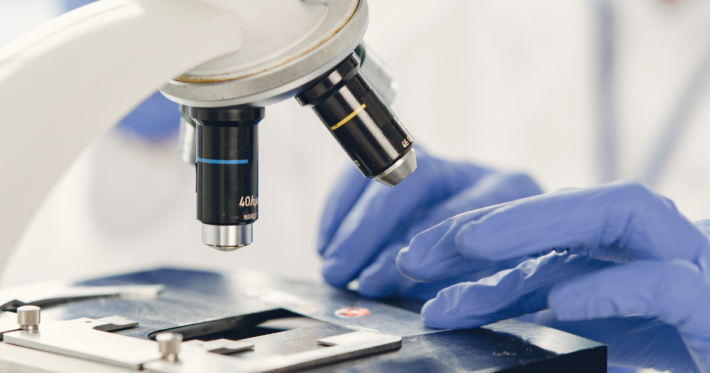
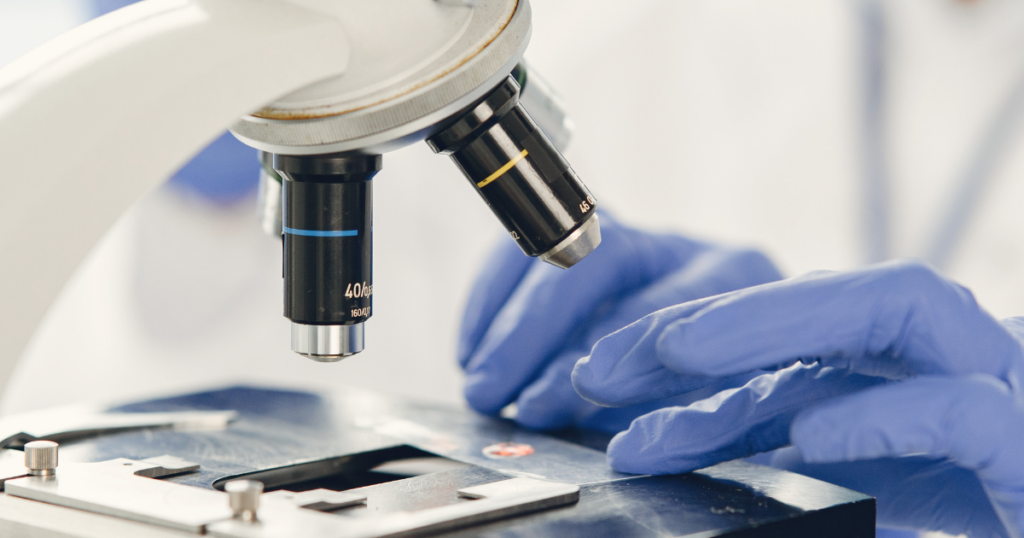
    A scientist wearing blue gloves adjusts a microscope slide.

    A new pilot trial at Northwestern University is asking one of the most important questions in synovial sarcoma treatment: when TCR-T therapy stops working, are the T cells truly gone, or can they be brought back to life?

    Background: The Promise and the Limit of TCR-T Therapy

    TCR-T cell therapy represents a major advance for patients with synovial sarcoma and myxoid/round cell liposarcoma (MRCL). In some clinical trials, approximately 40–50% of patients with synovial sarcoma or myxoid/round cell liposarcoma have responded to TCR-T therapy. However, many patients eventually experience disease progression, often within the first two years.

    When cancer progresses after TCR-T therapy, it may seem that the engineered T cells have stopped working or disappeared. However, research has shown that some of these cells can remain in the body even after the cancer begins growing again.

    New research suggests that is not always the case.

    What the Research Shows

    Scientists have found that even after cancer progresses following TCR-T therapy, many patients still have detectable engineered T cells circulating in their blood.

    These cells have a distinctive profile. They may lack certain markers commonly associated with T-cell exhaustion, such as PD-1 and LAG-3, but appear to have limited cancer-fighting activity. Laboratory studies suggest they may still have the potential to be reactivated and begin attacking cancer cells again. Researchers call these rare persisting cells, or RPCs.

    Researchers call these rare persisting cells, or RPCs.

    Laboratory studies have shown that a protein called IL-15 can wake these cells up — causing them to multiply and resume killing tumor targets. Animal studies have supported the same finding. The question now is whether this can work in patients.

    The Trial: NCT07261657

    The trial is led by Dr. Seth Pollack, MD, Steven T. Rosen Professor of Cancer Biology and Director of the Sarcoma Program at the Lurie Cancer Center, Northwestern University Feinberg School of Medicine. Dr. Pollack is among the leading researchers in TCR-T cell therapy for sarcoma and serves on the SSF Medical Advisory Board. His team opened the pilot trial in April 2026.

    The trial is testing a drug called N-803, an IL-15 superagonist manufactured by ImmunityBio. N-803 is designed to stimulate the immune system in a similar way to IL-15, but with greater potency and longer-lasting effects. The goal is to reactivate the engineered T cells that remain in patients after their cancer progresses.

    Researchers will primarily evaluate the safety of N-803 and whether it can increase the number of these remaining T cells. They will also look for early signs of cancer-fighting activity, including changes in tumor size and how long patients go without further disease progression.

    The study plans to enroll eight patients between the ages of 18 and 80 with synovial sarcoma or MRCL who previously received TCR-T therapy, experienced clinical benefit, but subsequently developed progressive disease. Additional eligibility and screening requirements apply. As of late August 2026, three patients had enrolled. 

    The trial is funded in part by the Waterton-Adrienne Smith Sarcoma Research Fund. ImmunityBio is supplying N-803.

    Why This Matters

    As TCR-T therapies become more accessible to synovial sarcoma patients — including through TECELRA, which received FDA approval in 2024 — the field faces a new challenge: what comes next when those therapies stop working?

    This trial is one of the first efforts to address that question directly. Rather than moving on to an entirely different treatment, it asks whether we can extend the benefit of what patients have already received.

    The answers are still ahead. This is an early-phase study, and no efficacy or safety results have been reported yet. But the scientific rationale is grounded in real biological evidence, and the implications could extend well beyond synovial sarcoma.

    Learn More

    • NCT07261657 on ClinicalTrials.gov
    • Source article, Cancer Network, October 2026
    • SSF clinical trials page
    • northwestern university
    • Rare Cancer
    • rare cancer research
    • research
    • soft tissue sarcoma
    • Synovial Sarcoma
    • synovial sarcoma diagnosis
    • Synovial Sarcoma Foundation
    • synovial sarcoma treatment
    • TCR Therapy
    ayushis

    Post navigation

    Previous

    Search

    Categories

    • Black Flag Racing (2)
    • Case Study (4)
    • Children (1)
    • CHOP (3)
    • Clinical Trial (4)
    • Development (12)
    • Dr. Theodore Laetsch (3)
    • Education (26)
    • Europe Expansion (1)
    • Healthcare (13)
    • Latest News (22)
    • Patient Story (1)
    • Programs (1)
    • Rare Cancer (7)
    • Rare Cancer Funding (2)
    • Research (21)
    • SSF Ambassador Program (1)
    • Synovial Sarcoma Conference (2)
    • Synovial Sarcoma Registry (7)
    • Teresa Belluco (1)
    • Tumor Board (2)

    Recent posts

    • A scientist wearing blue gloves adjusts a microscope slide.
      Can We Reactivate T Cells After TCR-T Therapy Stops Working?
    • Hands wearing blue nitrile gloves draw liquid from a small glass vial into a syringe, with a rack of test tubes in the background.
      Why Every Tumor Sample Matters: What a New Sarcoma Biobank Study Means for Synovial Sarcoma
    • Webinar recording poster titled “Inside the Synovial Sarcoma Foundation” featuring speakers Nathan Imperiale and Philip Leider, recorded October 9, 2026, and sponsored by US WorldMeds.
      Two Leaders, One Mission: Nathan Imperiale and Philip Leider on Synovial Sarcoma

    Tags

    #AYACancer #CancerResearch #CellTherapy #ClinicalTrials #KnowYourOptions #NYESO1 #PatientAdvocacy #RareCancer #RareDisease #Sarcoma #SarcomaAwareness #SarcomaCommunity #SoftTissueSarcoma #SynovialSarcoma #SynovialSarcomaFoundation Afami-cel Afamitresgene autoleucel Cancer Research CHOP immunotherapy MAGE-A4 synovial sarcoma NY-ESO-1 synovial sarcoma Rare Cancer rare cancer research rare soft tissue sarcoma research sarcoma research sarcoma treatment soft tissue sarcoma solitary fibrous tumor Synovial Sarcoma synovial sarcoma biomarker testing synovial sarcoma case report synovial sarcoma diagnosis Synovial Sarcoma Foundation synovial sarcoma immunotherapy synovial sarcoma misdiagnosis synovial sarcoma research synovial sarcoma treatment T-Cell Therapy targeted therapy TCR Therapy TECELRA Tecelra synovial sarcoma webinar

    Related posts

    Hands wearing blue nitrile gloves draw liquid from a small glass vial into a syringe, with a rack of test tubes in the background.
    Latest News, Synovial Sarcoma Registry

    Why Every Tumor Sample Matters: What a New Sarcoma Biobank Study Means for Synovial Sarcoma

    October 28, 2026 ayushis Comments Off on Why Every Tumor Sample Matters: What a New Sarcoma Biobank Study Means for Synovial Sarcoma

    A new study in Advanced Science (October 12, 2026) shows what becomes possible when patients donate tumor tissue and researchers pair it with detailed clinical and genetic data. The same idea drives the Synovial Sarcoma Registry and Biorepository, and every patient who joins makes the next study possible. What the study found Over ten years, […]

    Close-up of blue gloved hands adjusting a microscope with two visible objective lenses, focusing on a glass slide in a laboratory setting.
    Education, Research

    The Cells Around the Tumor May Hold the Key to Improving Immunotherapy in Synovial Sarcoma

    September 14, 2026 ayushis Comments Off on The Cells Around the Tumor May Hold the Key to Improving Immunotherapy in Synovial Sarcoma

    A new study published in PLOS One by Ji-Yong Sung, Jin-Hong Kim, and Yi-Jun Kim from Seoul National University and Ewha Womans University, South Korea, examines a type of cell found in the tissue surrounding tumors, called cancer-associated fibroblasts (CAFs), and asks whether they can predict how a sarcoma patient will respond to immunotherapy. What […]

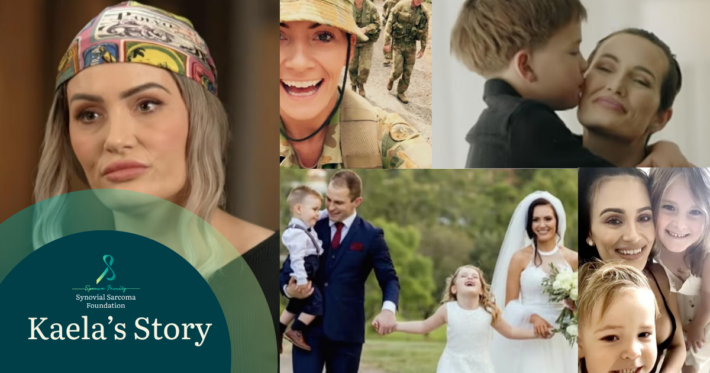
    A collage showing a woman in various moments: in a headscarf, in military attire, hugging her children, on her wedding day, and smiling with her family. Text reads, “Kaela’s Story.”.
    Patient Story, Synovial Sarcoma Registry

    In Conversation with Kaela: How Research Gave a Mom of Two a Second Chance at Life

    August 11, 2026 ayushis Comments Off on In Conversation with Kaela: How Research Gave a Mom of Two a Second Chance at Life

    Kaela Graham-Bowman’s story reached national audiences this year when she was featured on 60 Minutes Australia. An Afghanistan veteran and nurse, Kaela was diagnosed with synovial sarcoma in 2020 at age 28, while working as an oncology nurse herself. What followed was a six-year fight through surgery, chemotherapy, a devastating relapse, and eventually a groundbreaking […]

    The Synovial Sarcoma Foundation is a registered 501(c)(3) nonprofit organization. Tax ID number is 33-4027591. Contributions to the Synovial Sarcoma Foundation are tax-deductible to the extent permitted by law.

    • Terms & conditions
    • Privacy policy
    synovial sarcoma foundation
    • community@synovialsarcoma.org
    1025 Thomas Jefferson St. NW, Suite W-3200, Washington DC 20007
    Facebook-f X-twitter Linkedin

    Navigation

    • About
    • Research Programs
    • Patient Stories
    • Resources

    Stay in touch