Skip to content
synovial sarcoma foundation
  • About
    • Mission
    • Initiatives
    • Affiliations
    • Leadership
    • Board of Directors
    • Careers
  • Resources
    • Synovial Sarcoma FAQ
    • Treatments
    • Clinical Trials & Therapies
    • Synovial Sarcoma Patient Survey
    • Synovial Sarcoma Tumor Board
    • Patient Stories
    • Patient Resources
    • Eddie’s Story
  • Research Programs
    • Clinical Research
    • Tumor Glow
    • Synovial Sarcoma Registry
  • Latest News
Donate

Send us a note

Please fill out the form below and we will gladly respond as soon as possible.

    Education, Healthcare

    New Research Identifies 4 Subtypes of Synovial Sarcoma, Opening Doors for Personalized Treatment

    April 23, 2026 ayushis Comments Off on New Research Identifies 4 Subtypes of Synovial Sarcoma, Opening Doors for Personalized Treatment
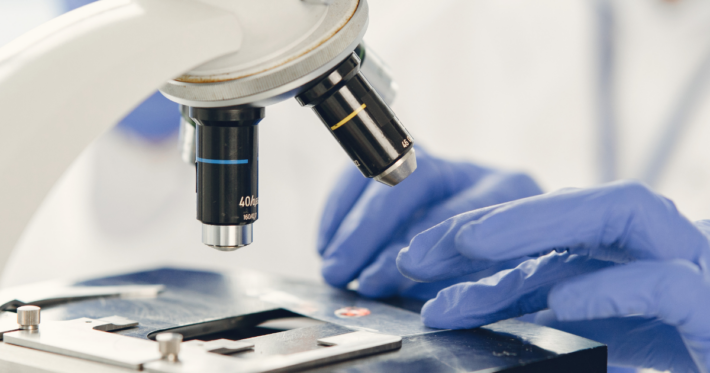
    A scientist wearing safety goggles and gloves examines samples through a microscope in a bright laboratory, with other researchers working in the background.

    Synovial sarcoma is a rare and aggressive soft tissue cancer, but new research is helping us better understand how it behaves—and how it may be treated in the future.

    A recent study using advanced single-cell RNA sequencing has identified four distinct subtypes of synovial sarcoma, each with unique biological features and potential treatment pathways.

    Why This Study Matters

    Synovial sarcoma has long been known to vary from patient to patient. It is driven by a genetic change called the SS18-SSX fusion, which plays a central role in tumor growth and behavior.

    However, traditional classifications don’t fully capture how different these tumors can be at a cellular level.

    This study analyzed over 35,000 individual tumor cells from 16 patients, offering one of the most detailed views of synovial sarcoma to date.

    The 4 Subtypes of Synovial Sarcoma

    Researchers identified four main subtypes:

    • NKD2+ subtype
      A mesenchymal form with strong resistance to treatment and limited immune response.
    • HOXD11+ subtype
      A poorly differentiated and more aggressive subtype, with signs of immune suppression.
    • DCN+ subtype
      A fibroblast-like subtype linked to blood vessel growth (angiogenesis) and tumor support systems.
    • EPCAM+ subtype
      A more differentiated subtype with epithelial features and different immune interactions.

    Each subtype shows different behavior in terms of tumor growth, immune response, and treatment sensitivity.

    What This Means for Patients

    This research highlights a major shift in how synovial sarcoma may be understood and treated:

    • Synovial sarcoma is not one disease, but multiple subtypes
    • Each subtype may respond differently to chemotherapy or targeted treatments
    • Future care could become more personalized based on tumor biology

    The study also identified potential drug targets for each subtype, though more research is needed before these can be used in clinical practice.

    The Bigger Picture

    By breaking synovial sarcoma into clearer subtypes, this research brings us closer to:

    • More precise diagnosis
    • Better treatment selection
    • Improved clinical trial design
    • New targeted therapy development

    Looking Ahead

    While these findings are still early, they represent an important step toward precision medicine in synovial sarcoma.

    Understanding the unique biology of each tumor could help researchers—and clinicians—develop more effective, tailored treatments for patients in the future.

    For more detailed information, please refer to the original publication. For more information about synovial sarcoma resources and support, please visit our website.

    ayushis

    Post navigation

    Previous

    Search

    Categories

    • Black Flag Racing (2)
    • Children (1)
    • CHOP (3)
    • Development (8)
    • Dr. Theodore Laetsch (3)
    • Education (16)
    • Healthcare (9)
    • Latest News (8)
    • Programs (1)
    • Rare Cancer (4)
    • Rare Cancer Funding (1)
    • Research (17)
    • Synovial Sarcoma Conference (2)
    • Synovial Sarcoma Registry (3)
    • Teresa Belluco (1)
    • Tumor Board (2)

    Recent posts

    • A scientist wearing safety goggles and gloves examines samples through a microscope in a bright laboratory, with other researchers working in the background.
      New Research Identifies 4 Subtypes of Synovial Sarcoma, Opening Doors for Personalized Treatment
    • A scientist in a lab coat and gloves uses a pipette to add liquid to a test tube. Several test tubes filled with blue liquid are in a rack beside a microscope on a bright laboratory desk.
      What a Breakthrough in Ewing Sarcoma Means for Synovial Sarcoma
    • A doctor in a white coat with a stethoscope around their neck holds a tablet device, standing in a medical setting with a patient lying on a bed in the background.
      Rare Tumor Mimics Synovial Sarcoma: Why Accurate Diagnosis Matters

    Tags

    Afami-cel BRAF mutated synovial sarcoma chemotherapy CHOP clinical trial Clinical Trials clinical trials rare cancer diagnosis Ewing Sarcoma immunotherapy molecular testing new treatments for synovial sarcoma pediatric synovial sarcoma precision medicine Rare Cancer rare cancer clinical trials rare cancer research rare disease drug development rare disease funding rare pediatric cancer rare soft tissue sarcoma research soft tissue cancer soft tissue sarcoma SS18-SSX translocation SS18::SSX SS research Synovial Sarcoma synovial sarcoma case report synovial sarcoma clinical trials synovial sarcoma diagnosis Synovial Sarcoma Foundation synovial sarcoma in children synovial sarcoma research synovial sarcoma subtypes synovial sarcoma symptoms synovial sarcoma treatment synovial sarcoma treatment market targeted cancer therapy targeted therapies for sarcoma targeted therapy TECELRA trabectedin UK’s Rare Cancers Bill webinar

    Related posts

    A scientist in a lab coat and gloves uses a pipette to add liquid to a test tube. Several test tubes filled with blue liquid are in a rack beside a microscope on a bright laboratory desk.
    Development, Education

    What a Breakthrough in Ewing Sarcoma Means for Synovial Sarcoma

    April 21, 2026 ayushis Comments Off on What a Breakthrough in Ewing Sarcoma Means for Synovial Sarcoma

    A new Phase 1/2 trial in Ewing sarcoma, just profiled in Clinical Trial Vanguard and published in Nature Medicine, delivered the kind of result the synovial sarcoma community should be watching closely. The trial paired trabectedin with low-dose irinotecan to target the EWS::FLI1 fusion, the oncogenic driver of Ewing sarcoma. For more than a decade, […]

    A doctor in a white coat with a stethoscope around their neck holds a tablet device, standing in a medical setting with a patient lying on a bed in the background.
    Education, Healthcare

    Rare Tumor Mimics Synovial Sarcoma: Why Accurate Diagnosis Matters

    April 17, 2026 ayushis Comments Off on Rare Tumor Mimics Synovial Sarcoma: Why Accurate Diagnosis Matters

    A recent case report highlights a rare GLI1-altered mesenchymal tumor presenting in the pleura (lining of the lung), a location where tumors can closely resemble synovial sarcoma. This case underscores a critical challenge in rare cancers — different tumors can appear similar under imaging and even under the microscope, making accurate diagnosis essential for appropriate […]

    Transparent blue spheres with molecular structures inside float near visible DNA double helix strands, creating a scientific and futuristic background focused on genetics and biotechnology.
    Education, Programs

    Cell Therapies for Synovial Sarcoma: Afami-cel (Tecelra)

    April 15, 2026 ayushis Comments Off on Cell Therapies for Synovial Sarcoma: Afami-cel (Tecelra)

    Advances in cell therapy for synovial sarcoma are creating more treatment options for patients with advanced disease. A recent update from Penn Medicine highlights the growing role of T-cell therapies in treating rare cancers like synovial sarcoma. What Is Afami-cel? Afamitresgene autoleucel (afami-cel) is the first FDA-approved T-cell receptor (TCR) therapy for adults with advanced […]

    The Synovial Sarcoma Foundation is a registered 501(c)(3) nonprofit organization. Tax ID number is 33-4027591. Contributions to the Synovial Sarcoma Foundation are tax-deductible to the extent permitted by law.

    • Terms & conditions
    • Privacy policy
    synovial sarcoma foundation
    • community@synovialsarcoma.org
    1025 Thomas Jefferson St. NW, Suite W-3200, Washington DC 20007
    Facebook-f X-twitter Linkedin

    Navigation

    • About
    • Research Programs
    • Patient Stories
    • Resources

    Stay in touch