Skip to content
synovial sarcoma foundation
  • About
    • Mission
    • Initiatives
    • Affiliations
    • Leadership
    • Board of Directors
    • Careers
  • Resources
    • Synovial Sarcoma FAQ
    • Treatments
    • Clinical Trials & Therapies
    • Synovial Sarcoma Patient Survey
    • Synovial Sarcoma Tumor Board
    • Patient Stories
  • Research Programs
    • Clinical Research
    • Tumor Glow
    • Synovial Sarcoma Registry
  • Latest News
Donate

Send us a note

Please fill out the form below and we will gladly respond as soon as possible.

Edit Content

    Latest News, Rare Cancer

    A Turning Point for Rare Cancers

    March 11, 2026 ayushis Comments Off on A Turning Point for Rare Cancers
    A wooden judge’s gavel with a gold band rests on top of a British flag, symbolizing law or justice in the United Kingdom.

    What the UK’s Rare Cancers Bill Means for the Synovial Sarcoma Community

    For decades, patients diagnosed with rare cancers have faced a structural disadvantage. Fewer treatment options. Fewer clinical trials. Less research funding.

    Now a new law in the United Kingdom aims to change that.

    The Rare Cancers Bill, introduced by Dr Scott Arthur MP, has received Royal Assent and is now law. The legislation is designed to improve clinical trial access, strengthen research infrastructure, and increase attention to diseases that historically fall outside the focus of large pharmaceutical investment.

    For the global sarcoma community, including those affected by synovial sarcoma, this represents an important step forward.

    The Problem Rare Cancer Patients Face

    Rare cancers are individually uncommon, but collectively they represent a massive portion of the cancer burden. In the United Kingdom, rare cancers account for nearly half of all cancer diagnoses and more than half of cancer deaths.

    Yet research investment and drug development have historically followed larger markets. As a result, many rare cancer patients face limited treatment options and fewer opportunities to participate in clinical trials.

    During debate surrounding the Rare Cancers Bill, one statistic stood out.

    Eighty two percent of rare cancer patients are never offered a clinical trial.

    For diseases like synovial sarcoma, where the patient population is small and geographically dispersed, this challenge becomes even more significant. Promising therapies may exist, but recruiting enough patients to run meaningful trials can be extremely difficult.

    What the New Law Changes

    The Rare Cancers Act focuses on fixing structural barriers that have slowed progress for decades.

    A National Lead for Rare Cancer Research

    The law establishes a national specialty lead responsible for coordinating rare cancer research across the UK.

    This role will help identify gaps in research funding, coordinate institutions studying rare cancers, and ensure these diseases are considered within national cancer strategy.

    For sarcoma researchers, this creates a clearer pathway for prioritizing rare cancer programs.

    Connecting Patients to Clinical Trials

    One of the most impactful changes involves improving how patients are matched with clinical trials.

    The legislation calls for systems that identify patients with rare cancers and notify them when relevant trials become available.

    Recruitment is one of the biggest obstacles in rare cancer research. When trials cannot enroll enough patients, studies are delayed or cancelled.

    Improving this process could make more sarcoma trials viable and accelerate research.

    Reviewing Orphan Drug Incentives

    The law also requires a review of orphan drug regulations. These policies are designed to encourage pharmaceutical companies to develop treatments for rare diseases.

    Because rare cancers involve smaller patient populations, companies often see limited financial incentive to invest in drug development.

    Strengthening these incentives could make rare cancer therapies more attractive to industry partners and help accelerate the development of targeted treatments.

    Strengthening Rare Cancer Data

    The bill also promotes better data sharing and the development of rare cancer registries.

    For diseases like synovial sarcoma, where patient numbers are small, data fragmentation is a major challenge.

    Larger shared datasets help researchers understand survival outcomes, treatment responses, and biological drivers of disease.

    These insights are critical for designing effective clinical trials and identifying new therapeutic strategies.

    Why This Matters for Synovial Sarcoma

    Synovial sarcoma illustrates the structural challenges rare cancer patients face.

    The disease affects a small number of patients worldwide. Research is often spread across institutions and countries. Clinical trials struggle to recruit enough participants.

    Policies that improve trial access, research coordination, and data sharing directly address these barriers.

    While the Rare Cancers Act will not produce new therapies overnight, it creates conditions that make research easier to conduct and clinical trials easier to run.

    Those structural improvements are often what allow breakthroughs to happen.

    What Comes Next

    Passing the law is only the first step.

    Implementation will involve building national trial matching systems, appointing leadership to coordinate rare cancer research, strengthening data infrastructure, and reviewing drug development incentives.

    If these efforts are carried out effectively, the UK could become one of the strongest environments in the world for rare cancer research.

    And because rare cancer science is deeply international, advances in one country often accelerate progress everywhere.

    For patients living with synovial sarcoma and other rare cancers, that kind of structural change matters. It creates the conditions where more trials can run, more therapies can be tested, and more progress can be made.

    For more information about synovial sarcoma resources and support, please visit our website.

    ayushis

    Post navigation

    Previous

    Search

    Categories

    • Black Flag Racing (2)
    • Children (1)
    • CHOP (3)
    • Development (4)
    • Dr. Theodore Laetsch (3)
    • Education (6)
    • Healthcare (5)
    • Latest News (7)
    • Rare Cancer (1)
    • Research (15)
    • Synovial Sarcoma Conference (2)
    • Synovial Sarcoma Registry (3)
    • Teresa Belluco (1)
    • Tumor Board (2)

    Recent posts

    • A wooden judge’s gavel with a gold band rests on top of a British flag, symbolizing law or justice in the United Kingdom.
      A Turning Point for Rare Cancers
    • A scientist wearing safety glasses and gloves closely examines samples through a microscope in a laboratory setting, concentrating on her research.
      Afamitresgene Autoleucel (Afami-cel): T-Cell Therapy Shows Promise in Synovial Sarcoma
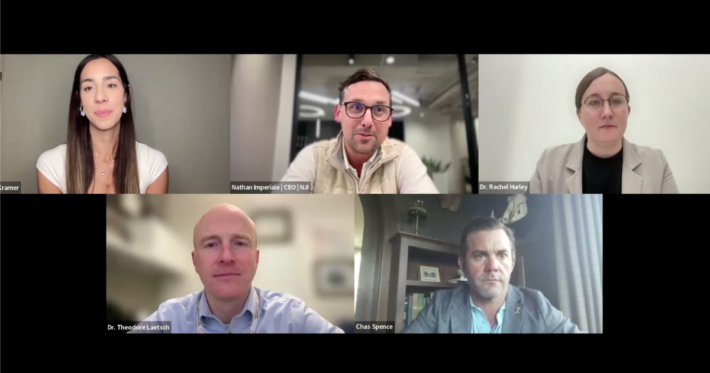
    • A virtual meeting with five professionals, three men and two women, each in their own space, looking at their cameras. Names and titles are displayed for some participants at the bottom of their video frames.
      Synovial Sarcoma Foundation Hosts Second Community Webinar Highlighting Research Momentum

    Tags

    Afami-cel Black Flag Racing Brigham and Women’s Hospital Callan Spence cancer-testis antigen Cancer Research Chase Spence Chas Spence CHOP Clinical Trials Dr. Rachel Hurly Dr. Ted Laetsch fibroblast fibroblast epigenome ground breaking human cell therapy immune-cell therapy Infant JAMA Internal Medicine Julie Kramer MAGE-A4 Market Growth Monophasic Synovial Sarcoma National Tumor Board Nature Communications P300 Parotid Gland Patient Stories Pediatric Oncology Penn Medicine Prasterone Rare Cancer research Sarcoma Synovial Sarcoma Synovial Sarcoma Foundation synovial sarcoma survivor synovial sarcoma treatment T-Cell Therapy TCR-NK TECELRA UK’s Rare Cancers Bill webinar Zelluna ZI-MA4-1

    Related posts

    A scientist wearing safety glasses and gloves closely examines samples through a microscope in a laboratory setting, concentrating on her research.
    Healthcare, Research

    Afamitresgene Autoleucel (Afami-cel): T-Cell Therapy Shows Promise in Synovial Sarcoma

    March 3, 2026 ayushis Comments Off on Afamitresgene Autoleucel (Afami-cel): T-Cell Therapy Shows Promise in Synovial Sarcoma

    Synovial sarcoma is a rare and often aggressive cancer that can become difficult to treat once it spreads. Traditional chemotherapy options are limited, and outcomes for metastatic disease remain poor. New research is exploring whether advanced T-cell therapies may offer another option. A recent clinical trial evaluated afamitresgene autoleucel (afami-cel), an engineered T-cell therapy designed […]

    A virtual meeting with five professionals, three men and two women, each in their own space, looking at their cameras. Names and titles are displayed for some participants at the bottom of their video frames.
    Latest News, Education

    Synovial Sarcoma Foundation Hosts Second Community Webinar Highlighting Research Momentum

    February 23, 2026 ayushis Comments Off on Synovial Sarcoma Foundation Hosts Second Community Webinar Highlighting Research Momentum

    On February 19, 2026, the Synovial Sarcoma Foundation brought together patients, families, clinicians, and researchers from around the world for its second community webinar—an evening focused on progress, partnership, and hope. The full webinar recording is available to watch below: The webinar was moderated by Nathan Imperiale, Chairman of the Board, and featured: Highlights Foundation […]

    A scientist in blue scrubs looks into a microscope in a modern laboratory, surrounded by glassware, test tubes, and laboratory equipment with shelves of supplies in the background.
    Research, Education

    Rethinking the Driver: New Research Identifies P300 as a Critical Co-Factor in Synovial Sarcoma

    February 23, 2026 ayushis Comments Off on Rethinking the Driver: New Research Identifies P300 as a Critical Co-Factor in Synovial Sarcoma

    Synovial sarcoma is driven by a defining genetic event — the SS18-SSX fusion protein, present in nearly all cases. For years, research and therapeutic development have focused on how this fusion interacts with the SWI/SNF chromatin remodeling complex, believed to play a central role in tumor growth. However, newly published research challenges that long-standing assumption […]

    The Synovial Sarcoma Foundation is a registered 501(c)(3) nonprofit organization. Tax ID number is 33-4027591. Contributions to the Synovial Sarcoma Foundation are tax-deductible to the extent permitted by law.

    • Terms & conditions
    • Privacy policy
    synovial sarcoma foundation
    • community@synovialsarcoma.org
    Facebook-f X-twitter Linkedin

    Navigation

    • About
    • Research Programs
    • Patient Stories
    • Resources

    Stay in touch